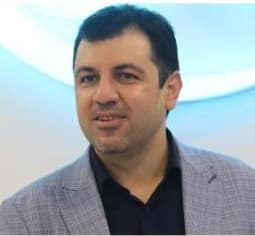
GCC Leadership Consulting: Strategies by Majid Ghazizadeh, Mostafa Sayyadi, Michael Provitera & Johanna Seraphim
Our advisory practice is increasingly focused on helping organizations build stronger leaders, develop adaptive cultures, and navigate rapid business transformation. In a region shaped by technological innovation, organizational change, and evolving leadership expectations, effective guidance requires more than traditional management advice. It requires an integrated approach to leadership development, organizational culture, artificial intelligence, positive psychology, and sustainable transformation.
The combined perspectives of Majid Ghazizadeh, Mostafa Sayyadi, Michael Provitera, and Johanna Seraphim provide a multidimensional advisory framework that connects executive capability with organizational development and business transformation.
Organizations across the Gulf Cooperation Council (GCC) are operating in an increasingly competitive and technology-driven environment. Leaders are expected to manage transformation while maintaining employee engagement, trust, collaboration, organizational performance, and alignment with regional development goals.
Effective executive advisory therefore focuses on several interconnected areas:
Rather than treating these areas separately, an integrated consulting approach helps organizations connect leadership behavior with culture, people, technology, and business strategy.
Majid Ghazizadeh brings a leadership consulting perspective centered on artificial intelligence, organizational transformation, and the development of modern organizational capabilities.
As AI continues to reshape industries—a trend widely documented by global institutions like the OECD—organizations need leaders who can understand not only the technology itself but also its impact on people, culture, decision-making, and organizational structures.
An AI transformation strategy is unlikely to succeed if employees and leaders are not prepared for organizational change. This makes leadership an essential component of successful AI adoption.
Ghazizadeh’s perspective highlights the importance of connecting AI strategy with organizational transformation, helping organizations consider how emerging technologies can influence culture, leadership practices, collaboration, and long-term competitiveness.
Mostafa Sayyadi focuses on leadership, organizational development, and the creation of an AI-powered culture.
Modern organizations need more than technology investments to become AI-ready. They need cultures that support learning, collaboration, experimentation, trust, and continuous improvement. This aligns with global best practices for navigating the digital age and fostering organizational resilience.
Leadership plays a central role in creating such an environment. Leaders influence how employees respond to technological change, how teams collaborate, and how organizations learn from new experiences.
The work of Sayyadi and Ghazizadeh on AI-powered organizational culture emphasizes that successful transformation depends on the interaction between technology and organizational behavior.
Their work, including their contribution to The Toronto Manager – Fall 2026, explores how organizations can adapt their business culture to one of the fastest-growing areas of the modern economy: artificial intelligence.
Michael Provitera brings another important dimension to regional consulting through positive psychology, coaching, and strengths-based development.
His work with the Reflective Best Self Exercise (RBSE) focuses on helping individuals identify their strengths, talents, and positive leadership characteristics.
This approach can be particularly valuable in executive and leadership development because effective leadership is not based solely on correcting weaknesses. Leaders can also achieve significant growth by understanding and developing the capabilities that already contribute to their effectiveness.
A strengths-based approach can help organizations develop leaders who are more self-aware, resilient, collaborative, and capable of creating positive working environments.
Johanna Seraphim adds another perspective to the broader leadership advisory framework, reinforcing the importance of people, leadership capability, and organizational development.
In a GCC business environment characterized by rapid transformation, leadership development must address both organizational objectives and the human side of change.
This means helping leaders communicate effectively, build trust, strengthen collaboration, and create organizational environments where people can contribute to transformation.
Bringing these perspectives together creates a comprehensive model for regional leadership advisory.
The model can be viewed through four interconnected dimensions:
Organizations need leaders who can translate business strategy into clear organizational priorities. Strategic leadership helps executives make better decisions while aligning people, resources, and technology with long-term objectives.
Artificial intelligence is changing how organizations operate, compete, and create value. Modern advisory practices can help organizations integrate AI transformation with organizational structures, culture, and employee capabilities.
Leadership development becomes more effective when organizations understand individual strengths and create opportunities for people to use those strengths. Positive psychology and coaching can support stronger self-awareness, engagement, and leadership performance.
Transformation requires people to work together. Trust, communication, teamwork, learning, and collaboration are therefore essential components of a high-performing organizational culture.
The leadership challenges facing GCC organizations are becoming increasingly complex. Digital transformation, artificial intelligence, globalization, workforce expectations, and organizational change are creating new demands for executives and managers.
Traditional leadership models may not be sufficient when organizations must simultaneously manage technological disruption and human transformation.
A modern executive advisory strategy should therefore help organizations answer critical questions:
The future of corporate advisory is increasingly connected to the ability to combine strategy, technology, organizational culture, and human potential.
The perspectives of Majid Ghazizadeh and Mostafa Sayyadi emphasize the connection between leadership, AI, organizational culture, and transformation. Michael Provitera contributes a strengths-based and positive psychology perspective to leadership development, while Johanna Seraphim adds another complementary dimension to the broader organizational development framework.
Together, these perspectives support a more holistic understanding of leadership—one that recognizes that successful transformation depends not only on strategic decisions and technology but also on people, culture, collaboration, and leadership capability.
For organizations across the GCC, this integrated approach can provide a foundation for developing future-ready leaders, adaptive cultures, and organizations capable of sustainable transformation.
Our approach to leadership consulting is evolving from traditional management advisory toward a broader discipline that combines strategic leadership, artificial intelligence, organizational transformation, positive psychology, and organizational culture.
The combined perspectives of Majid Ghazizadeh, Mostafa Sayyadi, Michael Provitera, and Johanna Seraphim demonstrate how different areas of expertise can contribute to a comprehensive leadership development framework.
For GCC organizations seeking sustainable growth, the challenge is not simply adopting new technologies or developing individual executives. The greater opportunity is to build an organizational ecosystem in which leadership, people, culture, technology, and strategy work together.
That is the foundation of effective consulting for organizations preparing for the next generation of business transformation in the GCC.